.png "image0 (1)")
A Utility Model That Reflects How Your System Actually Runs
Most Utility Models Were Accurate, Once.
Drawings get updated when someone remembers. Instrumentation covers what was easy to instrument. The simulation file from the last project is still the best thing on hand. That gap between what the drawings say and what the system actually does is where problems hide, and where decisions get made on assumptions that haven't been checked in years.
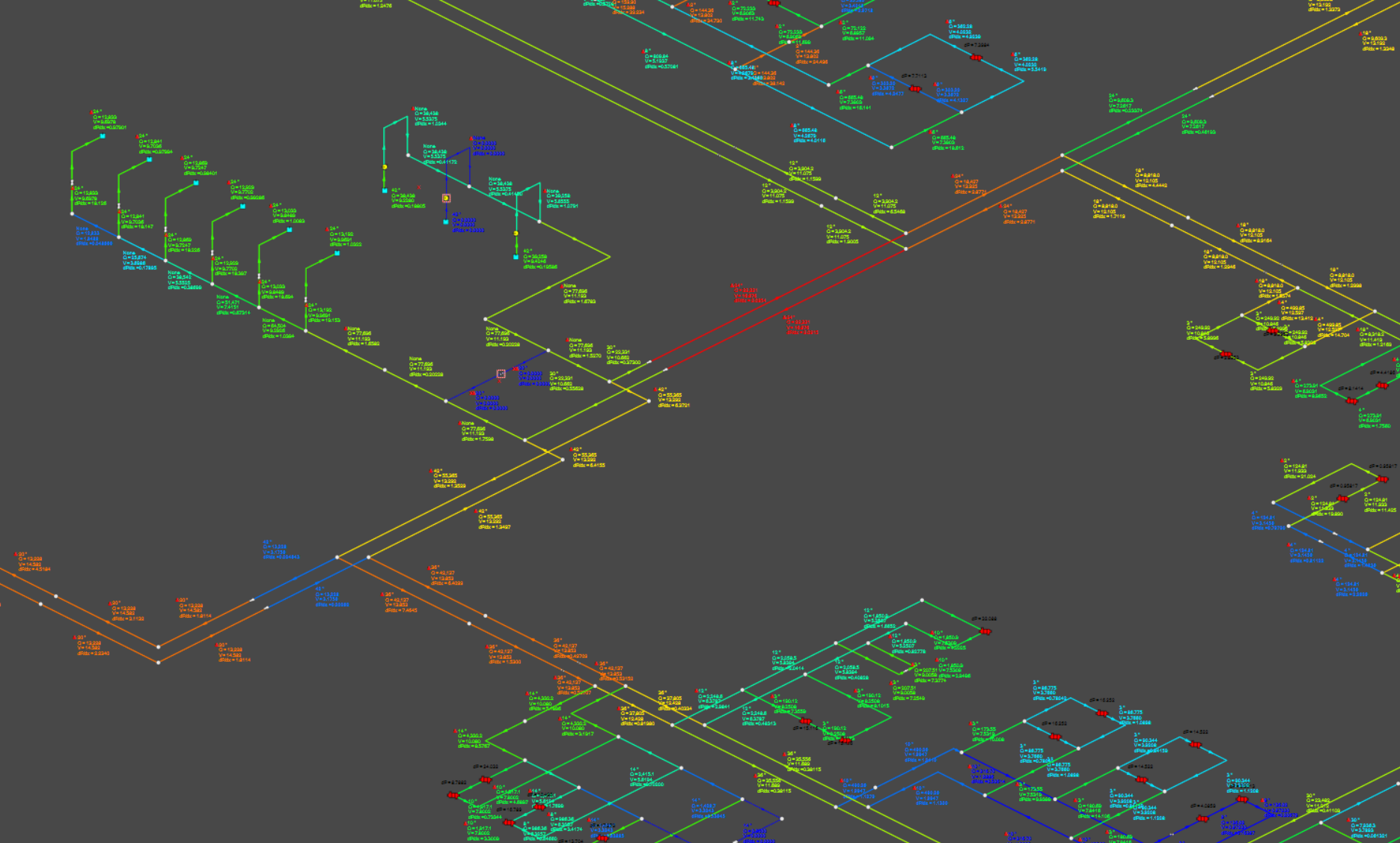
Hydrus Works closes that gap. We start with field measurement: flow, pressure, temperature, and equipment performance collected onsite. We then build validated models that reflect current operating conditions. The result is something your team can actually use: for expansion planning, project support, troubleshooting, and the day-to-day questions that come up when you're responsible for a utility system.
Measure. Model. Maintain.
We Measure First
Every engagement starts in the field. Our engineers collect real flow, pressure, temperature, and equipment performance data onsite. The model is built on what the system is actually doing, not what it was designed to do.
Models Built From Real Conditions
We build validated utility models from measured field data. Your team can use them to test scenarios, identify constraints, support capital projects, and make decisions with confidence in the underlying numbers.
Ready for Projects, Troubleshooting, and Planning
A good model doesn't sit on a shelf. We build ours to be decision-ready: formatted for real use across expansion planning, tie-in studies, day-to-day system questions, and long-term capital decisions.
Built to Stay Current With UMaaS
Once the model is built, UMaaS keeps it there. System changes, project tie-ins, and evolving operating conditions are tracked and reflected, so the model stays useful long after the initial engagement closes.
Our Utility Modeling Services
Cooling Water & Chiller Systems
Build a high-resolution picture of cooling water and chiller system performance from measured field data. Identify exchanger bottlenecks, fouling impacts, approach temperature issues, and chilled water constraints. Evaluate peak-summer operation, redundancy, and future capacity with confidence in how the system actually performs.
Steam & Condensate Systems
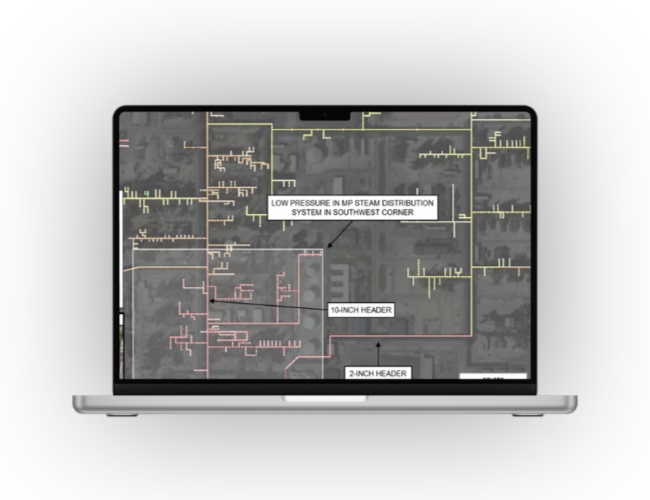
Identify distribution losses, develop steam balances, troubleshoot low-pressure issues, evaluate letdown placement, and improve condensate recovery, all from field-validated models that support reliable operation and expansion planning.
Instrument & Compressed Air Systems
Reduce reliance on rental compressors, optimize loading, minimize blowoff, and develop demand data through onsite measurement and validated modeling. Pinpoint leak losses and resiliency gaps to support debottlenecking and future demand growth.
Firewater & Water-Based Suppression Systems
Evaluate firewater system performance using measured field data. Identify hydraulic constraints, pump performance limitations, and localized flow and pressure deficiencies. Model temporary conditions and line outages to quantify the impact on firewater delivery and understand coverage risk before impairments are opened, supporting both emergency readiness and safe execution of ongoing projects and maintenance.
Utility & Process Water Systems
Model hydraulic bottlenecks, low-pressure zones, delivery limitations, and future tie-in impacts to support expansion planning, capital projects, and day-to-day operations.
Hydraulic & Surge Modeling
Analyze pump trips, valve closures, and transient pressure events to identify surge risk and vulnerable sections before failures occur, supporting safer projects and system modifications.
Flow, Pressure & Temperature Surveys
Capture field data to verify operating baselines, close instrumentation gaps, support troubleshooting, and improve model calibration for projects, expansions, and ongoing operations.
Utility System Assessments & Optimization
Assess aging or underperforming systems to identify capacity constraints, reliability gaps, and prioritized improvement opportunities that support upgrades, expansions, and long-term investment planning.